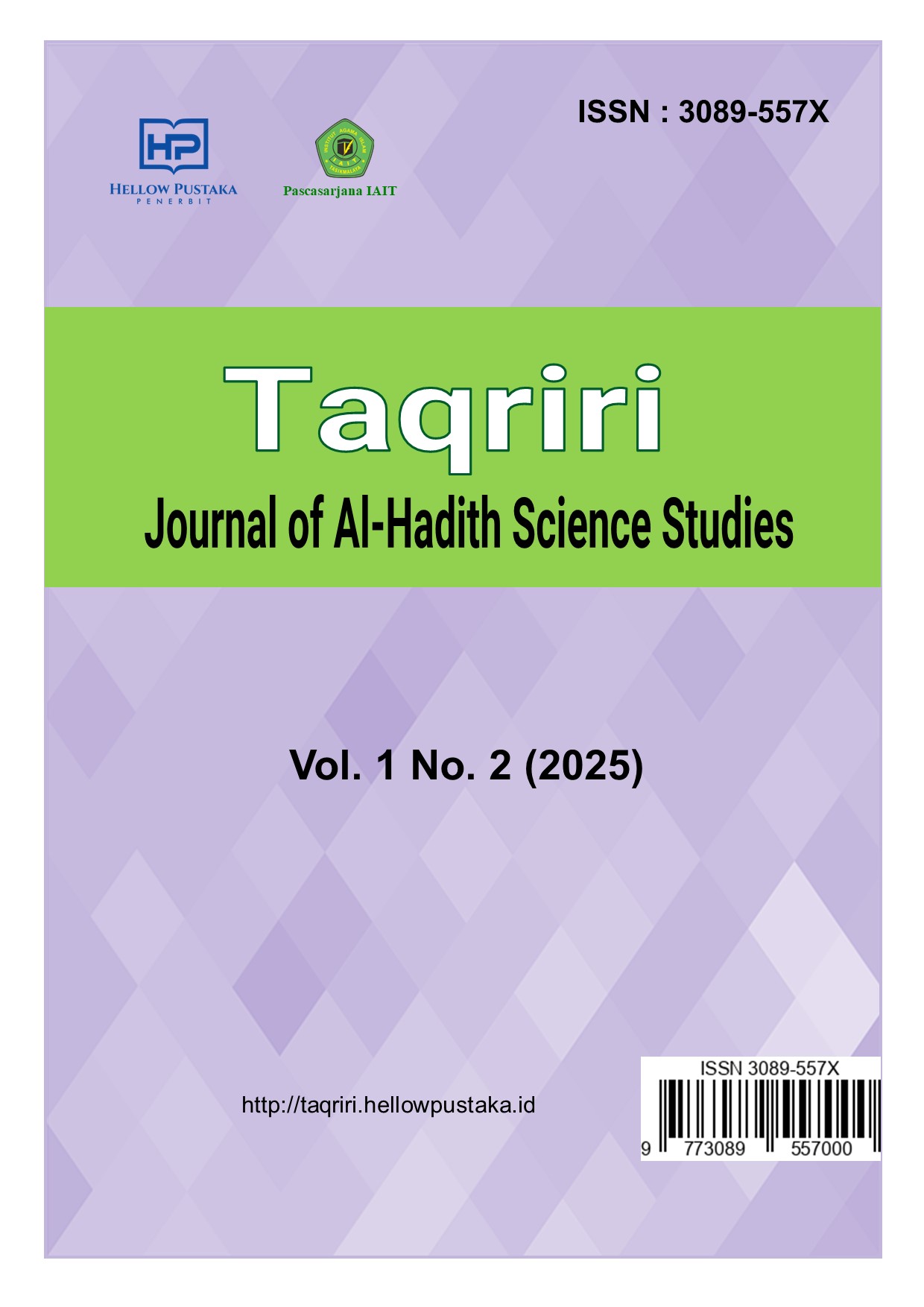
Principles of Ethical Speaking According to the Prophet's Hadith: An Analysis of Kutub Al-Tis`Ah
DOI:
https://doi.org/10.61166/taqriri.v1i2.22Keywords:
Hadith, Ethics, Principles, CommunicationAbstract
This study aims to analyze the concept of speaking ethics in the perspective of the hadith of the Prophet Muhammad SAW through a library research approach. Speaking ethics is an important part of social ethics in Islam which functions as a guideline for a Muslim's communicative behavior. The research data sources were obtained from several primary hadith books, namely: Ṣaḥīḥ Būkhārī, Ṣaḥīḥ Muslim, Sunan al-Tirmidhī, Sunan Abū Dāud and Sunan Ibn Mājah. The results of the study indicate that speaking ethics in the hadith include several basic principles, including the obligation to speak well or remain silent, speak effectively and not excessively, avoid lying, prioritize older or more knowledgeable people in speaking, avoid useless debates, and prohibition of cursing (backbiting) and finding fault with others. The findings of this study confirm that the quality of a Muslim's verbal communication is related to the quality of his faith. Speech etiquette serves as a moral control mechanism in social interactions and as an effort to maintain harmonious relationships between people, especially among Muslims. Therefore, the communication ethics taught in the hadith can serve as an important reference in establishing civilized and constructive Islamic communication practices within society.
References
Saebani Beni Ahmad. Ilmu Akhlak. Bandung: Pustaka Setia. 2010.
Nata Abudin. Akhlak Tasawuf. Jakarta: Raja frafindo. 1996.
Esposito John L. Ensiklopedia Dunia Islam dan Modern. Bandung: Mizan. 2001.
Departemen Pendidikan dan kebudayaan. Kamus Besar Bahasa Indonesia. Jakarta: Balai Pustaka. 1991.
Musaba Zulkifli. Terampil Berbicara. Yogyakarta: Aswaja Pressindo. 2012.
Saefullah Ujang. Kapita Selekta Komunikasi. Bandung: Simbiosa Rekatama Media. 20.
Ibn Ibrāhīm Imām Abī `Abd Allāh Muḥammad Ibn Ismā`Īl. Ṣaḥīḥ al-Bukhārī. Beirut: Dar al-Kotob al-Ilmiyah. 1440 H.
Malik Muh Syauqī Dkk. “Etika Komunikasi Dalam Perspektif al-Qur’an dan Hadis”. Jurnal Kependidikan dan Keagamaan. Vol. 6. No. 2. Desember 2024.
Taufiq Moh Imron. “Konsep Riba dalam Perspektif Hadis”. Jurnal Riset Agama. Vol. 1. No. 1 April 2021.
Putra Syawal Kurnia Dkk. “Etika Berkomunikasi dalam Perspektif Hadis”. Jurnal Ilmu Pendidikan dan Sosial. Vol. 2. No. 2. Juli 2023.
Alyaafi Muhammad dan Andhera Muhammad Raffi. “Riba dalam Pandangan Al-Qur’an dan Hadis”. Jurnal Sosial Humaniora Sigli. Vol. 6. N0. 1. Juni 2023.
Dewi Komala dan Ritonga Mirwansyah Putra. “Konsep Riba dalam Perekonomian Islam”. Jurnal Ekonomi Syariah Imelda. Vol. 3. No. 1. Januari 2025.
Nurlaela Aulia. “Menelusuri Kredibilitas Perawi, Syarat-Syarat dan Proses Transformasi Dalam Ilmu Hadis”. Jurnal Study Islam: Tafakkut Times. Vol. 1. No. 1. 2025.
Mawardī al-Abū al-Hasan `Ali al-Baṣrī. Etika Jiwa. Bandung: Pustaka Setia. 2003.
Amran dan Apriani Alfia. “Etika Berkomunikasi Perspektif Hadis”. Jurnal Wasatiyah. Vol. 1. No. 2 Desember 2020.
Mawardī al Abū Hasan. Mutiara Akhlak Al-Karimah. Jakarta: Pustaka Amani. 993.
Qusyairī al Abū al-Husain Muslim Ibn al-Hajjaj. Ṣaḥūḥ Muslim. Beirut: Dar al-Kotob al-`Ilmiyyah. 1991.
Tirmidzī al Muhammad Ibn ‘Isā. Sunan al-Tirmidzī. al-Riyad: Dar al-Salam li al-Nashr wa al-tawzi‘. 2000.
Asqalânî al Ibn Ḥajar. Fath al-Bârî Bi Syarh Ṣaḥīḥ al-Bukhârî. Kairo: Dâr al-Rayyân li al-Turâts. 2009.
Sindi al Abī al-Hasan al-Hanafī al-Ma`ruf bī. Sunan Ibn Mâjah. Beirut: Dar al-Ma`rifah 1997.
Sijistanī al Abī Dāwud Sulaiman Ibn al-Asy’ats. Sunan Abū Dāwud. Beirut: Bait al-Afkar al-Dauliyyah.
Downloads
Published
How to Cite
Issue
Section
License
Copyright (c) 2025 Masruroh

This work is licensed under a Creative Commons Attribution 4.0 International License.